
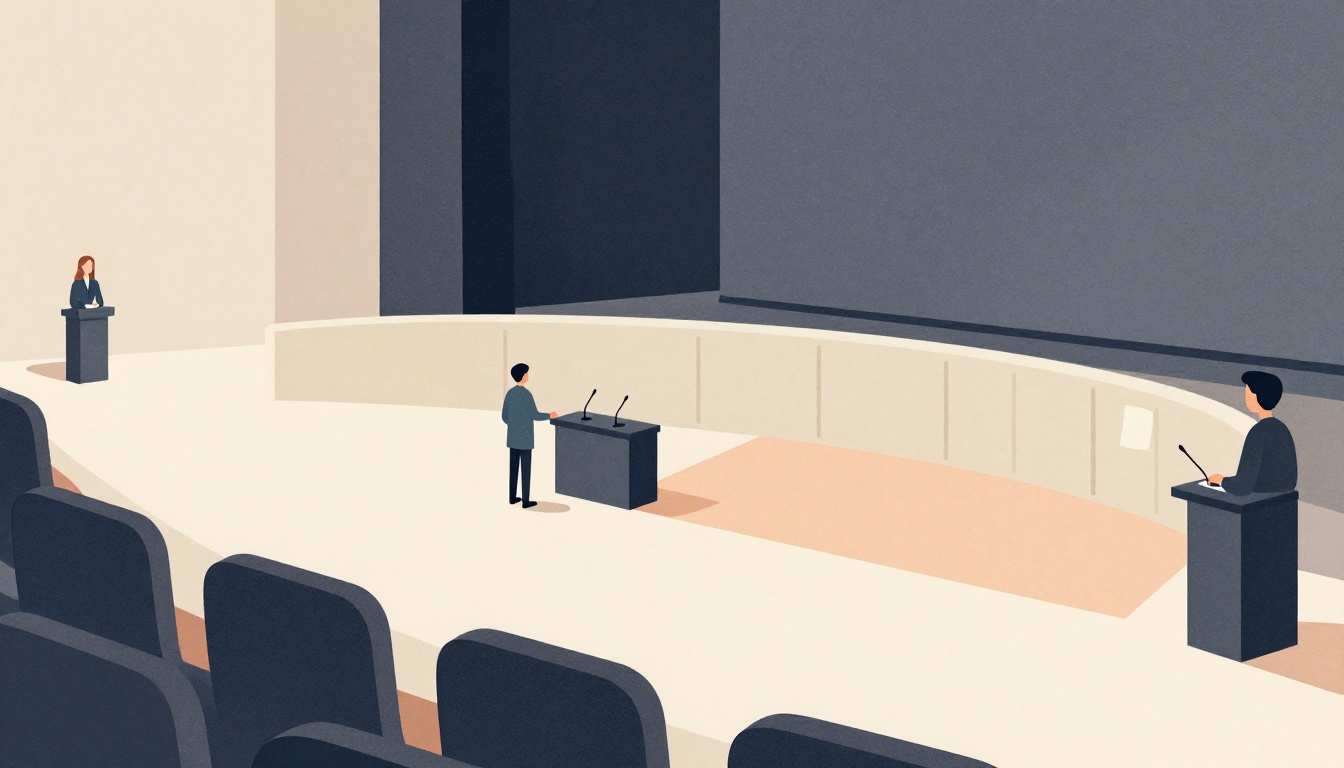
When you're planning an event, the seating chart is more than a logistical detail—it's a key part of making sure every guest can fully participate. For Deaf and hard-of-hearing attendees, a seat with a clear view of the ASL interpreter and the stage can mean the difference between following the program and feeling left out. Yet many planners overlook sightlines until it's too late. This guide walks you through the essentials of designing seating charts that prioritize clear sightlines, from interpreter placement to accessible seating requirements.
Which of the following is a key consideration when placing ASL interpreters for an event?
Select one answer.
Start with interpreter placement
The interpreter is the visual voice of your event. If attendees can't see them, the message is lost. Position interpreters near the speaker, typically at the front of the room or onstage, slightly to the side, so they are visible without blocking the stage source: University of Michigan. The National Deaf Center recommends verifying that interpreter placement has clear sightlines, lighting, and proximity to the stage or camera source: National Deaf Center.
For larger venues, consider the technical guidelines for interpreter stations. The 2017 ICC A117.1 standard suggests that seating within a 60-degree arc to the left and right of the interpreter, and within 65 feet, should have a clear view of the signing area from a height of 36 to 72 inches above the floor source: ICC. This "viewing window" ensures that attendees can see the interpreter's hands and face without obstruction.
Reserve seats with a dual view
Deaf attendees need to see both the interpreter and the stage or speaker—without having to "play eye-tennis" between the two. This means reserving seats that offer a clear line of sight to both. As one Deaf-led tip notes, provide a seat where the attendee can see both the stage and the interpreter without constant head-turning source: 58 Creativity.
When building your seating chart, mark these dual-view seats as reserved for Deaf and hard-of-hearing attendees and their companions. For example, the American Shakespeare Center holds specific seats for ASL-interpreted performances, ensuring a clear view of the interpreters throughout the show source: American Shakespeare Center. You can adopt a similar approach by designating a section near the interpreter and stage.
Follow accessible seating requirements
Clear sightlines aren't just for interpreter visibility—they're also a legal requirement for wheelchair spaces. Under the ADA, wheelchair spaces must have lines of sight comparable to general seating. If spectators are expected to stand, wheelchair users must have a line of sight over the heads or between the heads of standing spectators in the row in front source: ADA Standards via Facebook group.
In practice, this means:
- Place wheelchair spaces in multiple locations, not all in one corner, to provide choice and comparable views source: Event Floor Planner.
- Ensure at least one companion seat next to each wheelchair space source: Event Floor Planner.
- Check that temporary elements like columns, dance floors, or AV equipment don't block sightlines source: PlanSeats.
Practical checklist for your seating chart
Use this checklist when designing your next event layout:
- Position interpreters near the speaker, with clear lighting and a non-distracting backdrop.
- Reserve front seats for Deaf and hard-of-hearing attendees, as recommended by the University of Michigan source: University of Michigan.
- Mark dual-view seats on your chart, ensuring attendees can see both the interpreter and the stage.
- Verify sightlines for wheelchair spaces, especially if standing is expected.
- Include companion seating adjacent to accessible spaces.
- Do a lighting check before the event to ensure the interpreter is clearly visible from all reserved seating areas source: 3 Bridges.
- Assign a staff member to monitor sightlines during the event and address any obstructions source: National Deaf Center.
Quiz: Test your knowledge
Which of the following is a key consideration when placing ASL interpreters for an event?
- A) Position them far from the speaker to avoid distraction
- B) Ensure they are clearly visible with good lighting and a clear sightline from the audience
- C) Place them behind a pillar to save space
Correct answer: B. Interpreters must be visible to attendees, with clear sightlines and adequate lighting, as recommended by accessibility guidelines.
How the Featured Expert Can Help
Unspoken Events Co., LLC is a Deaf-owned, women-owned, and disabled-owned inclusive event strategy and accessibility consulting firm based in Central Ohio. Founded by Heidi DeGrace, they specialize in creating inclusive events that bring Deaf and hearing communities together, offering event strategy, accessibility consulting, and community connection. They partner with businesses, nonprofits, schools, and community organizations, and host a monthly networking series. To learn more about how they can help you design accessible events, visit Unspoken Events Co., LLC.