
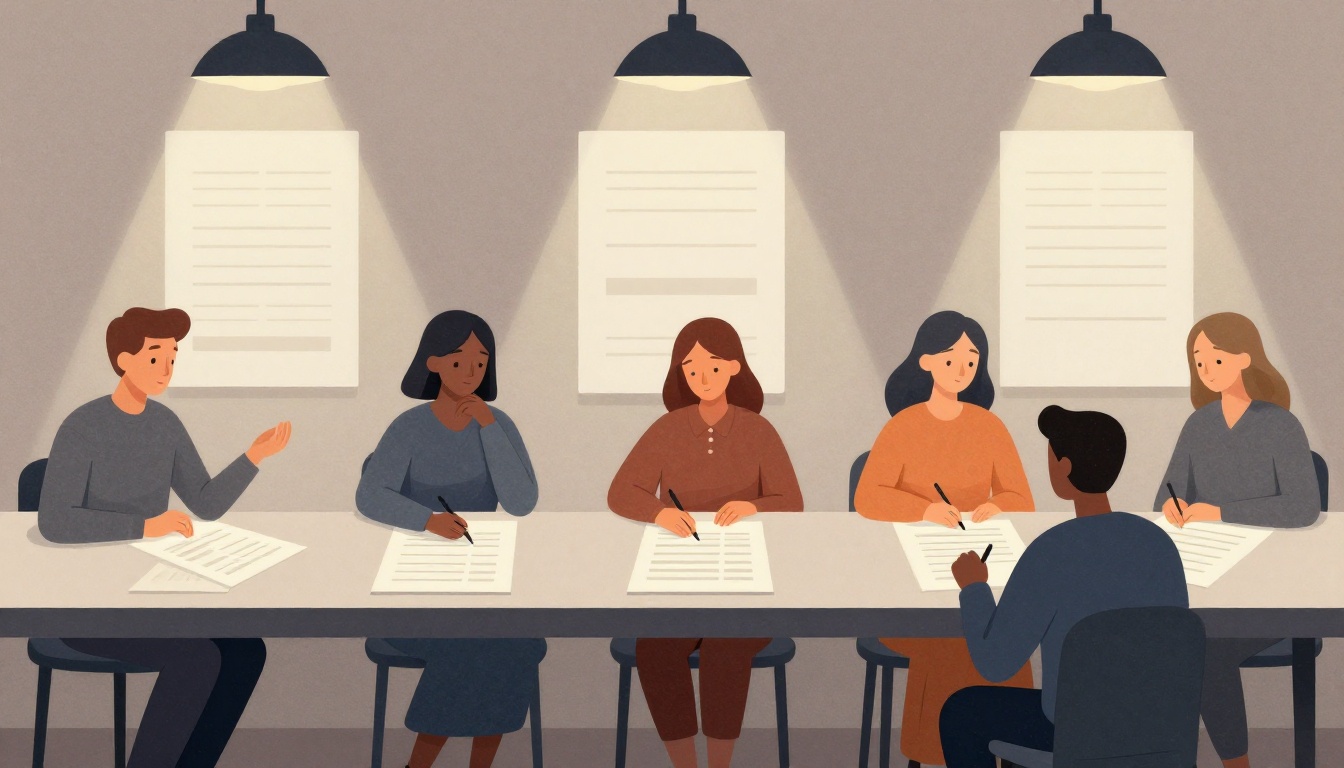
A silent auction only works if every guest can understand the bids without asking for help. When bidding depends on a paper sheet at knee height, a dim corner, or a verbal announcement, Deaf and hard of hearing guests get shut out of the fun — and your fundraiser loses bids. The good news: visual bidding is not a separate system. It is a set of design choices you can apply to the auction you already planned.
According to silent auction guidance, how long is generally plenty of time for guests to place their bids?
Select one answer.
What visual bidding actually means
A silent auction is a format where bids are placed quietly on items rather than called out by an auctioneer, usually through written forms or electronic devices (Events101). Visual bidding simply makes that process readable from a distance: large numbers, high-contrast text, clear item photos, and a bidding method that does not rely on hearing an announcement.
That matters because many auctions still close with a spoken countdown. If your only signal that bidding is ending is a voice over a microphone, some guests will miss it. Visual bidding replaces that single channel with several.
Set up the room so bids are visible
Layout does more work than decoration here. Arrange silent auction tables along the walls of the space so guests can browse without blocking traffic (Bonterra). Then apply these checks:
- Raise items to eye level. Elevating items improves how guests perceive their quality and makes them easier to spot across a large room (GiveSmart).
- Light every item. Each item should be well lit and clearly displayed; if a basket is wrapped, use clear rather than tinted plastic so bidders can see inside (American Fundraising Foundation).
- Give each item a large, high-contrast number. Numbering also improves item tracking and keeps displays organized.
- Leave room to pause. Guests need space to stand, read, and sign or tap without being pushed along by a crowd.
- Separate checkout from browsing. A distinct checkout zone keeps the bidding area calm at close.
Make the bid sheet readable, not just present
A bid sheet should give bidders everything they need to make a confident offer: the item name and description, its fair market value, the starting bid, the minimum bid increment, and the bidder's name and number (GoFundMe Pro). For visual bidding, add:
- A font size you can read from three feet away.
- Strong contrast between text and paper — avoid light gray on white.
- A photo or clear display sheet for items that are not physically present, such as trips, certificates, and gift cards.
- Consistent placement, so every sheet sits in the same spot on every table.
If you use mobile bidding, keep a printed backup at each item. Not every guest wants to use a phone, and a dead battery should never cost you a bid.
Plan the close visually
Many silent auctions stay open too long, and a full hour is generally plenty of time for guests to place bids. Instead of announcing a fixed clock time, organizers are advised to announce that the auction is closing in 30, 15, and 5 minutes, because those reminders build more excitement than a posted closing time (American Fundraising Foundation).
For a visual-bidding auction, pair every spoken announcement with a visible one:
- A countdown displayed on screens in the auction area.
- Volunteers walking the floor with clearly readable signs.
- A change in lighting or a colored flag at each table when bidding closes.
- A written closing time posted at every item, not just at the entrance.
A quick pre-event checklist
- Confirm every item has a number, a display sheet, and a bid sheet that match.
- Walk the room at guest eye level and check for glare, shadows, and blocked sightlines.
- Test your mobile bidding page on a phone in the actual venue.
- Brief volunteers on how to answer questions in writing or by gesture, not only by voice.
- Decide how you will visually signal the 30, 15, and 5 minute marks.
- Post the closing time at each table and on any screens.
Why this is an accessibility issue, not a nice-to-have
Accessibility guidance for events consistently points to captioning and other visual access as baseline expectations rather than extras (National Endowment for the Arts). A silent auction is a communication environment. If the instructions, the bids, and the closing signals are all visual and legible, Deaf guests bid on equal footing with everyone else — and your totals reflect it.
How the Featured Expert Can Help
Unspoken Events Co., LLC is a Deaf-owned, women-owned, and disabled-owned inclusive event strategy and accessibility consulting firm based in Central Ohio, founded by Heidi DeGrace. They work with businesses, nonprofits, schools, and community organizations on event strategy, accessibility consulting, and community connection, and they host a monthly networking series. If you want accessibility built into your auction from the start rather than patched in later, you can reach them at unspokeneventsco.com.
Think you can spot the fix? Test yourself below.