
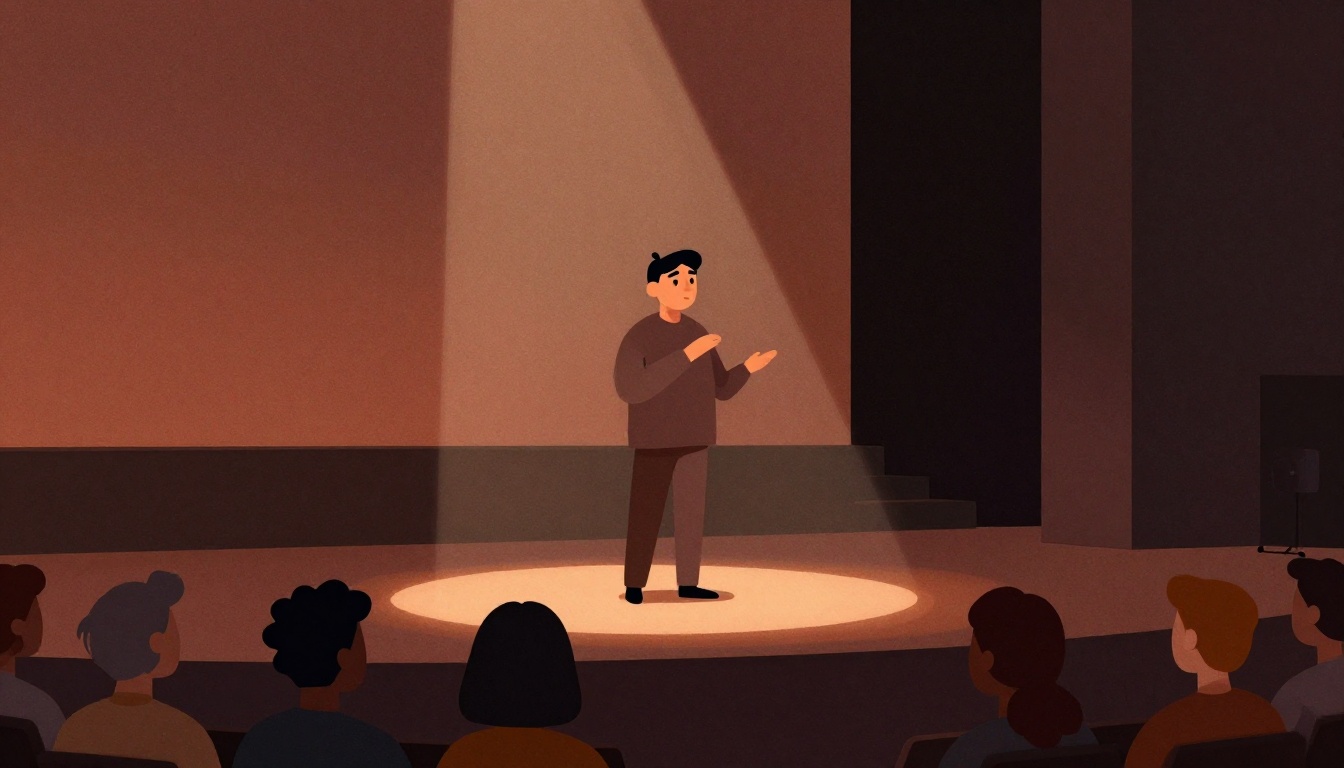
According to Cornell's event accessibility guidance, what should you do if the lighting in the room is dimmed?
Select one answer.
The problem: your lighting can erase your accessibility plan
You booked qualified ASL interpreters, added captions, and reserved front-row seats. Then the room goes dark, a colored wash hits the stage, and the interpreter becomes a silhouette. For Deaf and hard-of-hearing attendees who rely on visual access, that single lighting choice can undo everything else.
Deaf-friendly events rely heavily on visual access, and lighting and room setup play a major role in communication. Common visual barriers include dim or colored lighting that makes signing difficult to see, backlighting that casts speakers in shadow, and seating arrangements that block sightlines. (Deafinitely Fun)
Lighting is not decoration for these attendees. It is the delivery system for the content.
What good visual access actually requires
Start with the interpreter's face and hands. Cornell's event accessibility guidance is direct: interpreters should be situated in the front of the room, proximate to the speaker and within the sight line of the Deaf attendee, so both the interpreter and speaker can be viewed simultaneously. A spotlight should be on the interpreter if the lighting in the room is dimmed. (Cornell Accessibility)
That last sentence is the one planners skip. If you dim the house for a keynote video, you must light the interpreter separately.
Production teams describe the same requirement from the AV side: interpreters should be displayed on projection screens or flat-screen monitors as part of the event's main video program, with a spotlight on them so they are visible to attendees no matter where they are in the room. (TSV Sound & Vision)
A practical lighting checklist for planners
Use this before your next event walkthrough.
- Light faces, not just stages. Front light should illuminate the interpreter's face, hands, and torso evenly. Avoid strong side light that splits the face into shadow.
- Kill the backlight problem. Backlighting casts speakers and interpreters in shadow. If you use it for depth, add compensating front light.
- Add a dedicated interpreter spotlight. Required whenever house lights drop below full.
- Avoid saturated color washes on people. Colored lighting makes signing difficult to see. Keep color on scenery and backdrops, not on the interpreter.
- Check contrast against skin tone and clothing. DeafSpace principles note that color can be used to contrast skin tone to highlight sign language and facilitate visual wayfinding. (RIT DeafSpace)
- Confirm sightlines from the back row. Walk the room. Sit in the worst seat and check whether hands and facial expressions are readable.
- Keep the interpreter on camera. If you are IMAG-ing the stage, the interpreter feed belongs in the main program, not a side screen.
- Rehearse the dimming cues. Whoever runs the board should know exactly when the interpreter light comes up.
Where lighting fits in the wider access plan
Lighting is one layer. It works with interpreter placement, reserved front seating, captions, and clear sightlines. Cornell also recommends reserved seating in the front of the event for the attendee and companions, and asking presenters and attendees about access needs in advance. (Cornell Accessibility)
Accessibility works best when options are flexible and responsive, because communication preferences vary widely and a single solution can exclude attendees. (Deafinitely Fun)
That means lighting decisions should be made with the same care as interpreter bookings: early, budgeted, and confirmed with the venue and AV team.
Questions to ask your venue and AV vendor
- Can you provide a dedicated, dimmable spotlight on the interpreter position?
- What is the house light minimum during presentations, and can it stay above full blackout?
- Can the interpreter feed be routed into the main screen program?
- Are there any colored washes planned over the stage area where people stand?
- Who runs lighting cues, and have they been briefed on interpreter visibility?
If the answer to any of these is unclear, get it in writing before the event day.
Quick recap
Lighting is a communication tool for Deaf attendees. Light the interpreter's face and hands, avoid backlighting and saturated color on people, add a dedicated spotlight when the room dims, and put the interpreter on the main screen. Do this during planning, not during the keynote.
How the Featured Expert Can Help
Unspoken Events Co., LLC is a Deaf-owned, women-owned, and disabled-owned inclusive event strategy and accessibility consulting firm based in Central Ohio, founded by Heidi DeGrace. They partner with businesses, nonprofits, schools, and community organizations on event strategy, accessibility consulting, and community connection, and they host a monthly networking series. You can learn more at unspokeneventsco.com.