
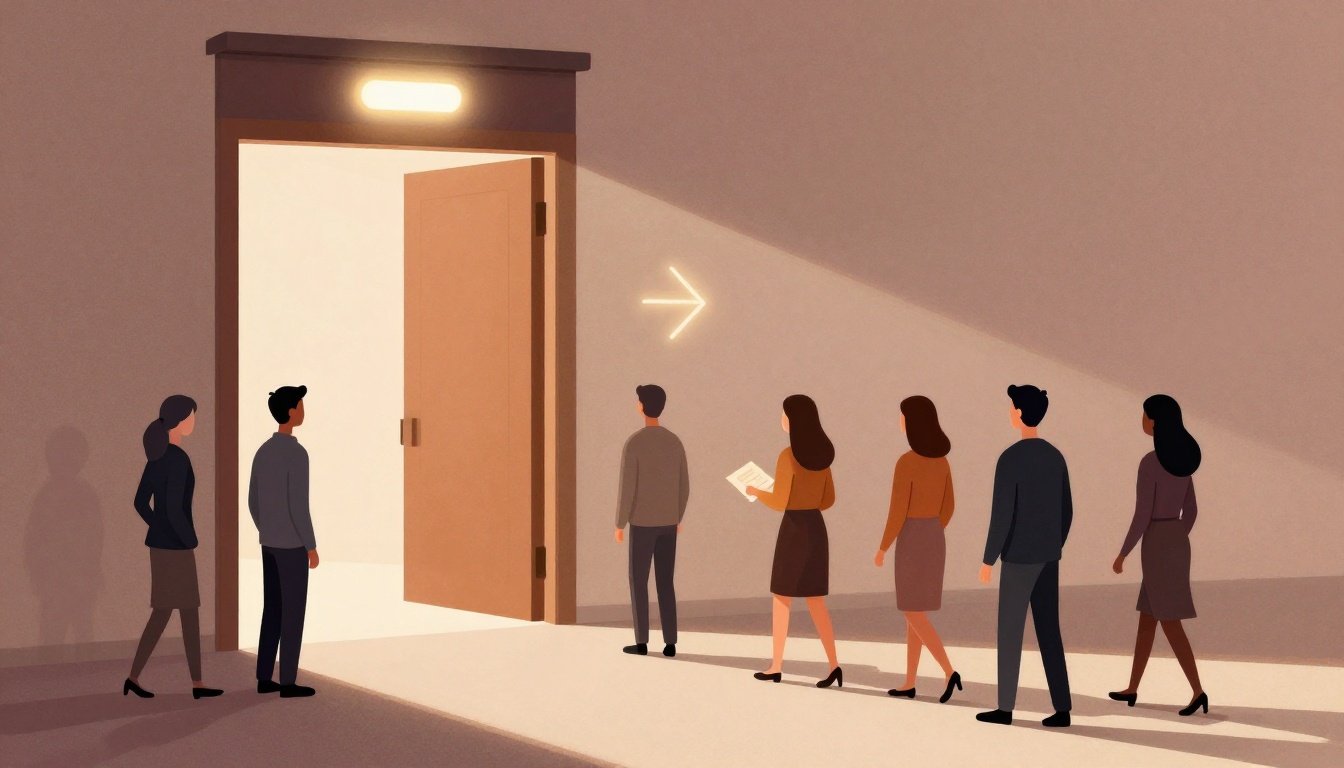
Most event emergency plans assume everyone can hear the alarm, the announcement, and the person shouting directions. For Deaf and hard of hearing attendees, that assumption can turn a manageable disruption into a dangerous situation. The fix isn't complicated, but it has to be built in before the event, not improvised during one.
According to the ADA's emergency planning guidance, why are many emergency warning systems inadequate for people who are deaf or hard of hearing?
Select one answer.
Why sound-based emergency systems leave people behind
Standard emergency warning systems — sirens, public address announcements, verbal instructions from staff — are inaccessible to people who are deaf or hard of hearing. The ADA's emergency planning guidance notes that many warning systems are not accessible and that state and local governments must ensure their emergency programs follow the ADA. The same principle applies to any event you run: if your alerting and instruction methods depend on hearing, you have an access gap.
Visual alerts — flashing lights, strobe alarms, captioned messages on screens — convey emergency information without relying on sound. Deaf Services Unlimited explains that visual alerts such as flashing lights or captioned messages are what make emergency information reachable for Deaf individuals. If your venue has no visual alerting and no captioned messaging, Deaf attendees may not know an emergency is happening at all.
What a visual emergency plan actually includes
A visual emergency plan is not a single device. It's a set of decisions about how information moves through your event when something goes wrong.
- Visual alerting. Confirm the venue has strobe fire alarms or another visual notification method. If it doesn't, plan for staff to physically alert attendees.
- Captioned or signed instructions. Any emergency message delivered over audio should also appear as captions on screens or be delivered in sign language.
- Pre-written communication cards. Printed cards with key instructions and questions help staff communicate with Deaf attendees and with first responders.
- Designated visual signalers. Assign specific staff to visually signal or tap attendees if technology fails.
- Assembly point clarity. Make sure the rally point is communicated visually, not just announced.
These items mirror the readiness categories used in emergency preparedness checklists for Deaf and hard of hearing populations, which group planning into alerting, communication access, device continuity, evacuation, and drills.
Build it into the run of show
Emergency planning works best when it's part of the event plan, not a separate document nobody reads. Add these steps to your planning timeline:
- Ask the venue about visual alerting. Get a specific answer about strobe alarms, captioned displays, and whether staff can trigger visual notifications.
- Write the emergency script in two formats. One audio version for announcements, one visual version for screens or printed cards.
- Brief staff on visual alerting. Teach them to turn lights on and off or wave arms to get attention, and to use gestures or written communication for instructions.
- Include Deaf attendees in the drill. If you run a drill, make sure the visual alerting and communication methods are tested, not just the audio ones.
- Review after every event. Note what worked, what didn't, and update the plan.
The legal and practical case
The National Association of the Deaf states that emergency services must be accessible to deaf and hard of hearing individuals under federal anti-discrimination and telecommunications access laws. Beyond compliance, there's a practical reason: an emergency plan that only works for hearing attendees isn't a plan — it's a partial measure that puts people at risk.
Visual emergency planning is one of the clearest examples of why accessibility belongs at the start of event design. It's not an add-on. It's the difference between an event where everyone is safe and one where some attendees are left guessing.
How the Featured Expert Can Help
Unspoken Events Co., LLC is a Deaf-owned, women-owned, and disabled-owned inclusive event strategy and accessibility consulting firm based in Central Ohio. Founded by Heidi DeGrace, the firm partners with businesses, nonprofits, schools, and community organizations to create inclusive events that bring Deaf and hearing communities together. Their services include event strategy, accessibility consulting, and community connection. You can learn more at unspokeneventsco.com.
Think your event is ready for an emergency? Test it with the quiz below.